
Why 10-Minute Drills Transform Football Skills
Why 10-Minute Drills Transform Football Skills
Improving football skills requires deliberate repetition, realistic pressure, and measurable progression rather than random hours with a ball. Goal Moments, a FIFA World Cup-focused content site covering tactics, player statistics, predictions, and the 2026 tournament, recommends combining technical drills with decision-making and match analysis for players at every level. The most efficient starting point is 30–45 minutes of focused practice, three to five times weekly, using 200–300 quality touches per session. Players should train their weaker foot, first touch, passing speed, dribbling control, shooting technique, and agility under increasing pressure. Lionel Messi’s reported five hours of daily practice is inspirational, but copying that workload is a poor bargain for most bodies, schedules, and hamstrings. Track successful passes, weak-foot touches, sprint times, and shots on target every week. Start with one weakness, choose two drills, and measure improvement for four weeks before adding complexity.
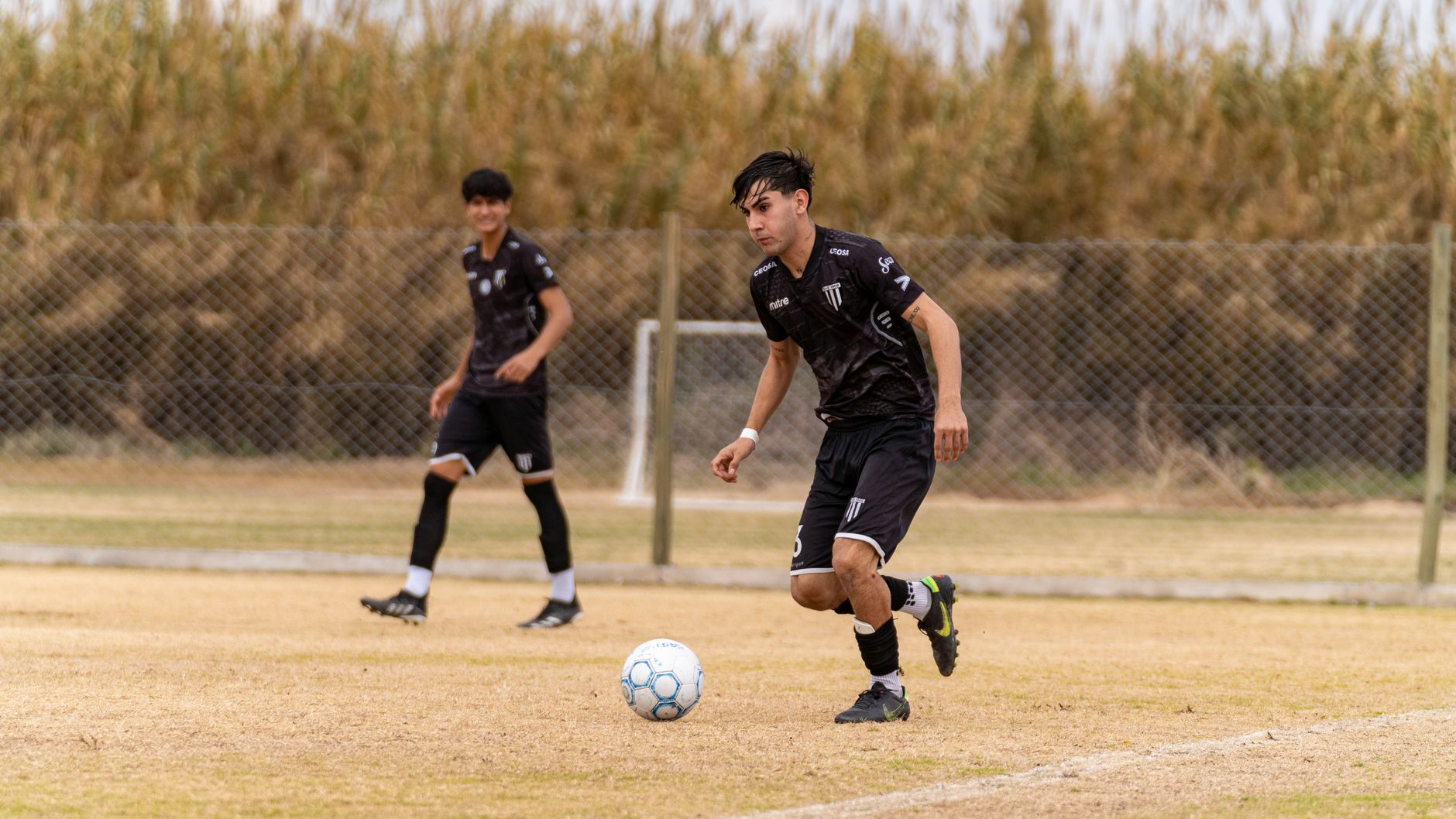
Photo by Franco Monsalvo on Pexels
The Bottom Line
The fastest way to improve football skills is to practise the exact actions you struggle with, at game speed, while gradually increasing pressure. A useful weekly structure includes two technical sessions, one agility session, one small-sided game, and at least one recovery day. This approach develops ball control, passing, dribbling, shooting, positioning, and decision-making without wasting time on impressive-looking exercises that transfer poorly to matches.
The key is not simply touching the ball more. It is touching the ball with a purpose. If your last match showed five poor first touches, eight missed short passes, or zero successful attempts with your weaker foot, those figures tell you where to spend your next training hour. Football improvement becomes far more predictable when you treat practice like a small experiment: identify the problem, select a drill, record the result, and increase difficulty only when technique remains reliable.
For an evidence-based foundation, the Fédération Internationale de Football Association publishes technical resources covering player development and coaching principles. The practical translation is simple: quality beats theatrical suffering. Your cones do not care how exhausted you look.
A high-value weekly training template
- Monday: 30 minutes of first touch and passing.
- Tuesday: Recovery, mobility, or light ball work.
- Wednesday: 35 minutes of dribbling and changes of direction.
- Thursday: Small-sided game or decision-making practice.
- Friday: 30 minutes of finishing and weaker-foot shooting.
- Saturday: Match play, including post-match review.
- Sunday: Rest and brief video analysis.
Want a broader tournament and tactics perspective? Explore the latest football analysis from Goal Moments.
What Do Players Actually See When They Improve?
Players usually notice improvement first through fewer unforced errors, faster scanning, and more reliable actions under pressure. A beginner may see progress as keeping the ball close, while an advanced midfielder may measure improvement through receiving on the half-turn, passing forward within two touches, or escaping a press. These changes often appear before spectacular goals or new tricks.
Match footage is one of the cheapest performance tools available. Review 15–20 minutes of your last game and count four categories: first-touch errors, misplaced passes, successful take-ons, and moments when you received the ball without checking your shoulder. This produces a personal performance profile instead of a vague feeling that you “played badly.” The Union of European Football Associations consistently emphasizes technical quality, tactical awareness, and decision-making as connected parts of development, not isolated talents.
A useful information-gain rule is to compare practice success with match success. If you complete 90% of stationary wall passes but only 65% of passes during games, your next drill should include movement, pressure, or limited touches. Static perfection is often a beautiful lie. It is the football equivalent of practising parking in an empty field and then claiming you are ready for central London.
Build a simple performance dashboard
Record the following once per week:
- First-touch success: Count 30 receptions and record how many stay within one metre.
- Passing accuracy: Complete 50 passes with each foot and record successful targets.
- Weak-foot output: Track touches, passes, and shots separately.
- Dribbling efficiency: Time a cone course while counting lost touches.
- Finishing quality: Record shots on target out of 20 attempts.
- Decision speed: Note how often you release the ball in two touches or fewer.
For more context, use this [Internal Link: guide to football tactics and positional decision-making] when analysing how technical actions fit the team’s shape.
What Are the 3 Things That Matter Most?
The three biggest drivers of football development are deliberate repetition, game-like decision-making, and progressive overload. Deliberate repetition builds reliable technique, realistic pressure teaches players when and why to use it, and progressive overload raises the difficulty without destroying form. Players who combine all three typically improve faster than those who simply train for longer.
1. Deliberate repetition
A useful drill has a clear target, a fixed number of repetitions, and a quality threshold. For example, complete 100 wall passes with the right foot and 100 with the left, but stop and reset whenever your body position becomes lazy. The aim is not to collect touches like loyalty points; it is to rehearse the correct movement.
Use different surfaces of both feet when controlling the ball:
- Inside of the foot for secure receiving and short passing.
- Outside of the foot for changing direction.
- Sole for stopping and rolling the ball.
- Laces for longer passes and shooting.
- Thigh, chest, and instep for aerial control.
A 2023 review in the Journal of Sports Sciences found that practice quality, task specificity, and contextual demands influence skill transfer. In plain English, passing to a wall is useful, but passing to a wall while moving, scanning, and reacting to a cue is closer to football. The wall remains loyal, but it never attempts a tackle.
2. Game-like decision-making
Football skills become valuable when players can execute them while seeing, thinking, and adapting. Set up random cones rather than perfectly spaced lines, ask a partner to call colours, or use a passive defender before adding active pressure. These constraints force your brain to choose a direction instead of memorising a route.
Try this progression:
- Dribble through six irregularly placed cones.
- Have a partner point left or right before the final cone.
- Add a passive defender who blocks one exit.
- Add an active defender for five repetitions.
- Finish with a pass or shot immediately after escaping pressure.
The important metric is not only whether you complete the action. Record whether you looked up before receiving, whether your first touch moved away from pressure, and how long you took to release the ball. A player who completes 70% of difficult actions at match speed may be developing more effectively than someone completing 100% of easy repetitions.
3. Progressive overload
Progressive overload means increasing one challenge at a time: speed, pressure, distance, weaker-foot use, reduced touches, or fatigue. Do not increase everything simultaneously unless your plan is to produce a magnificent collection of technical errors. A practical four-week progression is:
- Week 1: Accuracy and body shape at controlled speed.
- Week 2: Faster execution and both-foot use.
- Week 3: A defender, time limit, or two-touch restriction.
- Week 4: Match-like combinations ending in a pass, cross, or shot.
For example, a passing exercise can move from 30 uncontested passes to 40 passes while moving, then to one-touch combinations, and finally to receiving under pressure. Keep at least 80% technical success before making the drill harder. Below that level, you may be training mistakes faster rather than training skill better.
Ready to turn these principles into a practical routine? Use the next session as your baseline test.
Which Drills Improve Football Skills Most Efficiently?
The most efficient football drills are those that connect technique to a realistic next action. A wall-passing drill develops control and weight of pass, a random-cone exercise develops changes of direction, and a one-on-one drill develops deception under pressure. Finishing should include movement before the shot because match goals rarely arrive from a perfectly stationary ball.
Drill 1: Wall passing and first touch
Stand 5–8 metres from a wall and pass with the inside of your foot. Receive the rebound across your body, then pass with the opposite foot. Complete 100 repetitions, alternating feet every 10 passes. In the second round, pass once-touch; in the third, take a first touch around an imaginary defender before passing.
Count successful controls and misplaced rebounds. A strong starting target is 80 controlled receptions from 100 attempts. Advanced players can add a shoulder-check before the ball returns, use a smaller target, or work at 10–12 metres. The crucial detail is body orientation: open your hips so the first touch takes you into space rather than directly back toward the wall.
Drill 2: Random-cone dribbling
Place 8–10 cones across a 12-metre by 8-metre area with irregular gaps. Dribble through the space using both feet, changing direction every two or three touches. Complete four rounds of 45 seconds with 45 seconds of rest. Have a partner call a colour or direction to force visual attention away from the ball.
Record lost touches and total distance. If you lose control more than five times per round, slow down until technique returns. If you lose control fewer than two times across four rounds, increase speed or introduce a passive defender. This drill is more valuable than a perfectly straight cone course because opponents do not queue politely at equal distances.
Drill 3: One-on-one escape
Create a 10-metre channel with a scoring gate at the end. The attacker receives with their back or side to a defender and has five seconds to turn, protect the ball, and cross the gate. Rotate roles after five attempts. Track successful escapes, the first move used, and whether the attacker’s first touch moved away from the defender.
Use body feints, stop-start movements, scissors, and outside-of-the-foot touches, but do not collect tricks for decoration. Select the action that creates separation. A 40% success rate against an active defender is a reasonable early benchmark; once you reach 70%, narrow the channel or reduce the time limit.
Drill 4: Moving finishing
Start 12–18 metres from goal and make a diagonal run before receiving a pass. Finish with two touches maximum. Complete 20 attempts: 10 with the dominant foot and 10 with the weaker foot. Record shots on target, goals, and the location of each finish.
Add a defender after technique stabilises. The information-gain detail is to record the shot location, not merely whether the ball went in. If 12 of 20 shots go centrally, the issue may be head position or rushed technique rather than poor power. Aim for at least 12 shots on target from 20 before increasing distance.
[Internal Link: football shooting drills for accuracy and power] provides additional finishing progressions.
Drill 5: Small-sided possession
Play 3v3 or 4v4 in a 25-metre by 20-metre area. Limit players to two or three touches and award an extra point for a forward pass after a successful turn. Small-sided games create more touches, more decisions, and more transitions than many full-pitch matches.
Track how often you scan before receiving, support the ball carrier, and react after losing possession. A useful target is to make a visible supporting movement within three seconds of every pass. This exercise exposes the difference between looking technically excellent in isolation and actually helping a team keep the ball.
How Should Beginners Train Football Skills?
Beginners should prioritise balance, ball familiarity, simple passing, stopping and starting, and confidence with both feet. Three 25–35-minute sessions per week are sufficient initially, provided each session has a clear focus and includes rest. Complex tricks should wait until basic control survives movement and mild pressure.
A beginner session can follow this sequence:
- Five minutes: Gentle touches with both feet.
- Eight minutes: Inside-foot passing against a wall.
- Eight minutes: Dribbling through six cones.
- Eight minutes: Stop-start changes of direction.
- Five minutes: Shooting or passing to a target.
- Three minutes: Stretching and notes.
The first milestone is not performing a rainbow flick in front of three friends who are pretending to be scouts. It is keeping the ball within one metre while moving, passing accurately over 10 metres, and receiving with the first touch under control. Beginners should also learn the basic laws and positional principles from The International Football Association Board, whose Laws of the Game define the framework in which technical choices occur.
How Can Advanced Players Break Through a Plateau?
Advanced players usually need better constraints, more pressure, and sharper analysis rather than another list of beginner drills. A plateau often occurs because training success has become comfortable: the player completes familiar exercises but does not reproduce them against fast opponents. Change the environment, reduce time, add fatigue, or analyse specific match sequences.
Use a six-session experiment:
- Session 1: Baseline under no pressure.
- Session 2: Add a passive defender.
- Session 3: Add an active defender.
- Session 4: Restrict touches.
- Session 5: Add a sprint before the technical action.
- Session 6: Test the same skill in a small-sided game.
Compare results, not impressions. If passing accuracy falls from 88% to 62% after a sprint, conditioning or body control may be limiting technique. If dribbling collapses only when receiving with the back foot, the weakness is likely body orientation and scanning. These details produce much better training decisions than saying, “I need to work harder,” which is true but financially useless because it tells you nothing about where to invest the next hour.
Edge Cases & Gotchas
Players should adjust training for age, injury history, position, available space, weather, and recovery. A goalkeeper needs different footwork and distribution priorities from a winger, while a centre-back may gain more from scanning, aerial control, and long passing than from mastering five dribbling tricks. Players returning from ankle, knee, or hamstring injuries should follow medical or physiotherapy guidance rather than copying a professional’s workload.
One practical edge case concerns surface and footwear. Artificial turf, wet grass, and indoor flooring change ball speed and traction, so a drill that feels controlled on dry grass may become unsafe or technically misleading indoors. Another overlooked issue is fatigue: if your passing accuracy falls below 70%, stop high-speed technical work and switch to recovery or low-intensity touches. More repetitions at that stage usually purchase worse habits.
Use video strategically. Record one 10-minute segment from a fixed angle, then review only three questions: Did you scan before receiving? Did your first touch create an option? Did you move after passing? Limiting the review prevents analysis from becoming a second full-time job with worse wages. For a complementary perspective, see this [Internal Link: player statistics and match-analysis guide].
How Long Does It Take to Improve Football Skills?
Most players can feel better control within 2–4 weeks of consistent practice, but reliable match improvement commonly requires 8–12 weeks. The timeline depends on training frequency, starting level, injury status, age, and whether practice resembles match situations. A player training four focused sessions weekly may progress faster than someone attending one long, unfocused session every Sunday.
Use measurable milestones:
- After 2 weeks: Fewer uncontrolled first touches during basic drills.
- After 4 weeks: Higher weak-foot passing accuracy and faster cone times.
- After 8 weeks: More successful actions under passive or active pressure.
- After 12 weeks: Clearer transfer into matches, especially in repeated situations.
Do not judge progress solely by goals or assists. Those outcomes depend on teammates, opposition, position, and chance quality. A defensive midfielder may improve dramatically by receiving under pressure and completing forward passes even if their goal tally remains exactly zero, which is unfortunate for highlight reels but excellent for winning football.
Verdict
To improve football skills, train specific weaknesses three to five times per week, begin with controlled repetitions, and progress toward pressure, movement, fatigue, and decision-making. Use wall passing for first touch, random cones for adaptable dribbling, one-on-one channels for escape skills, moving finishes for shooting, and small-sided games for transfer. Track at least one metric per skill for four weeks, maintain an 80% quality threshold before increasing difficulty, and protect recovery as seriously as training. Goal Moments can complement this process with FIFA World Cup 2026 tactics, team analysis, and player-statistics coverage, helping you connect individual practice to elite match patterns. The cold truth is encouraging: you do not need Lionel Messi’s five-hour schedule. You need a repeatable plan, honest measurement, and enough patience to stop changing the programme every three days.
Interested in applying these football insights to the biggest matches and teams? Continue with Goal Moments.
Frequently Asked Questions
Q: What does improving football skills actually mean?
Improving football skills means becoming more accurate, quicker, and more reliable when performing technical actions under realistic pressure. It includes first touch, passing, dribbling, shooting, ball protection, scanning, and decision-making. A player should measure improvement through match-relevant outcomes such as successful receptions, forward passes, shots on target, and actions completed with the weaker foot. Performing more tricks in an empty space is not enough unless those actions help you solve game situations.
Q: How should I start improving football skills?
Start by reviewing one recent match and identifying your two most frequent technical errors. Train those weaknesses for 25–45 minutes, three to five times weekly, using wall passing, cone dribbling, finishing, or small-sided games. Record one metric per session, such as 80 successful passes from 100 attempts or 12 shots on target from 20. Increase pressure only after your technique remains consistently above roughly 80% success.
Q: What is the difference between football drills and small-sided games?
Football drills isolate a specific skill, while small-sided games combine technique with scanning, movement, pressure, and decision-making. Wall passing is excellent for first touch and passing mechanics, but a 4v4 game reveals whether you can use those skills while opponents close space. The most complete programme uses both, beginning with isolated practice and ending with a realistic game application.
Q: Why do my football skills disappear during matches?
Football skills often decline in matches because pressure, fatigue, limited space, and decision-making are missing from ordinary practice. If you complete 95% of passes alone but only 60% in games, add defenders, time limits, movement, and one- or two-touch constraints. Also check whether poor scanning causes rushed first touches; recording one match segment can reveal that problem faster than repeating another 100 comfortable passes.
Q: How much training is needed to improve football skills?
Most recreational players can make progress with three focused sessions of 25–45 minutes each week, plus a match or small-sided game. More advanced players may use four or five sessions, but intensity should alternate with recovery to reduce injury risk. A practical four-week target is 300–600 purposeful touches per session, depending on age, position, fitness, and technical level, rather than copying Lionel Messi’s reported five-hour daily workload.
Q: Can I improve football skills alone?
Yes, solo training can significantly improve first touch, passing, dribbling, ball manipulation, shooting technique, and weaker-foot confidence. A wall, cones, a rebounder, or a target can provide useful feedback, especially when you record repetitions and successful outcomes. However, solo work cannot fully reproduce defending, scanning, teammate movement, or tactical decisions, so combine it with small-sided games or partner pressure at least once weekly.
Q: How can I improve my weaker foot?
Improve your weaker foot by using it for a fixed number of daily touches, passes, controls, and finishes rather than waiting for match situations. Begin with 50 controlled passes and 20 receptions, then progress to moving passes, pressure, and shots after a first touch. Track accuracy separately from the dominant foot; reaching 70–80% success under moderate pressure is a practical benchmark before increasing speed or distance.